THELAKE.PROJECT
THELAKE.PROJECT
michael strevens操纵建筑镜头进入摘要模式
michael strevens操纵建筑镜头进入摘要模式
michael strevens操纵建筑镜头进入摘要模式
michael strevens操纵建筑镜头进入摘要模式
michael strevens操纵建筑镜头进入摘要模式
michael strevens操纵建筑镜头进入摘要模式
michael strevens操纵建筑镜头进入摘要模式
michael strevens操纵建筑镜头进入摘要模式
michael strevens操纵建筑镜头进入摘要模式
michael strevens操纵建筑镜头进入摘要模式
一个大数据媒体雕塑

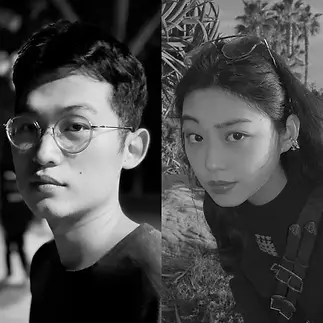
黄恩琦&王歆童
Artist Collective
Huang Enqi PhD candidate in Artificial Intelligence and Digital Image Research at the Central Academy of Fine Arts (CAFA). His artistic practice spans a diverse range of forms including interactive video, mechanical interactive installations, bioart installations, AI-generated imagery, and AI interactive installations. He has participated in numerous exhibitions such as the 1st China Digital Art Exhibition, the 1st & 2nd Beijing Media Art Biennale (BMAB), the China Western Art Biennale, the New Youth Experimental Art Biennale, and the On the Road · Nomination Exhibition of Chinese Young Artists' Works.
Representative Works: The Black Pot, Minor Remarks, The Rotten Apple, Fairy Tale Incident
Wang XintongBorn in 1998. She completed her undergraduate studies in Digital Media Art at CAFA, her master’s degree in Design & Technology at Parsons School of Design, and is currently a PhD candidate in Contemporary Art Creation and Research at CAFA. Her practice primarily focuses on video, projection installations and virtual reality (VR). Her video works have been shortlisted for international film festivals including the Supernova Digital Animation Festival, and her design works have won the Red Dot Design Award.
Representative Works: Pigeon Theatre, Journey to Nothingness, The Rotten Apple
In DNBeta
2025
Glass Room
Resident Artists: Huang Enqi & Wang Xintong
Materials: Installation, goldfish, glass fish tank, aluminum profile frames, Raspberry Pi, village loudspeakers, cameras, spotlights
Dimensions: Variabl
By misleading AI, the work makes it narrate the real-time movements of two goldfish in a glass tank as the live play-by-play of a boxing match.
The piece constructs a scenario in the vein of the "Chinese Room" thought experiment, yet removes the wall that severs language and understanding in the original experiment. Here, "Language" (the goldfish in the tank) and "the description of language" (the action of the boxing match) are dramatically presented side by side, revisiting the question of whether AI possesses genuine understanding in a playful, teasing tone.
Amid a series of conflicts without cause and victories without consequence, perhaps misunderstanding is merely one of AI’s ways of describing the world.
Q&A
Q: Please briefly introduce yourself.
W: My name is Wang Xintong. I am a digital media artist and currently a PhD candidate in Contemporary Art at the Central Academy of Fine Arts (CAFA). Enqi and I are doctoral classmates.
H: My name is Huang Enqi. I am a new media artist and AI art creator, and also a PhD candidate at CAFA.
Q: What kinds of artistic practices and themes do you usually focus on?
W: I mainly focus on video, new media art, and games. Through my collaboration with Enqi, I’ve also been researching AI-related creative topics. However, I tend to de–high-tech my approach—I try to make so-called technological art feel lighter and more down-to-earth.
H: My works involve interactive video, interactive installations, bio-art installations, and AI-generated imagery. I create through the integration of art and technology, using everyday media as materials to build channels of empathy with audiences. The technology embedded in the works remains隐蔽, allowing viewers to sense the latent alienation of reality.
Q: Artist residencies often involve stepping away from familiar environments. How has this experience influenced your practice?
W: Residencies do bring a sense of unfamiliarity, which is actually very helpful for creation. During residencies, I often notice small things that I wouldn’t normally see—or might never have encountered at all. Most of my works are born from subtle curiosities drawn from the surrounding environment.
H: Living in a different environment—accompanied by freshness, discomfort, and eventual familiarity—is the driving force of creation.
Q: Which artists have you been consistently paying attention to, and why?
W: I follow younger-generation new media artists such as Ian Cheng and Jon Rafman. I’m also very interested in experienced contemporary artists like Xu Bing and Pierre Huyghe—their observations of society, depth of thinking, and keen intuition for artistic paths are all very instructive. In addition, I pay close attention to game designers and bands; games and music are art forms that deeply fascinate me.
H: Doris Salcedo. Her works often point to death and trauma—whether individual or social—becoming a form of record or memorial. Her keen sensitivity makes the form of her works feel light, yet they carry a heavy sense of power. I’m also very interested in Pierre Huyghe’s work. I think his works resist textual explanation, which is precisely the importance of art: as a form of expression beyond language.
Q: What are your plans for future creation?
W: As an artist duo, we’d like to participate in Goodbye, Artist—if that program still exists. Next, we’ll likely continue developing our style and keep exploring this relatively light-hearted approach to AI-based works, depending on what new strange ideas come up.
H: Working as a duo has brought me a new mode of creation. Wang Xintong is very quick-thinking and has a great sense of humor; our ways of thinking complement each other. Going forward, we will continue creating new works through collaboration.
Contact
I'm always looking for new and exciting opportunities. Let's connect.
123-456-7890